


Dental bridges — close the gap, restore your smile
Which bridge is right for you?
Dr. Sadineni will recommend the most appropriate type after your examination and X-rays.
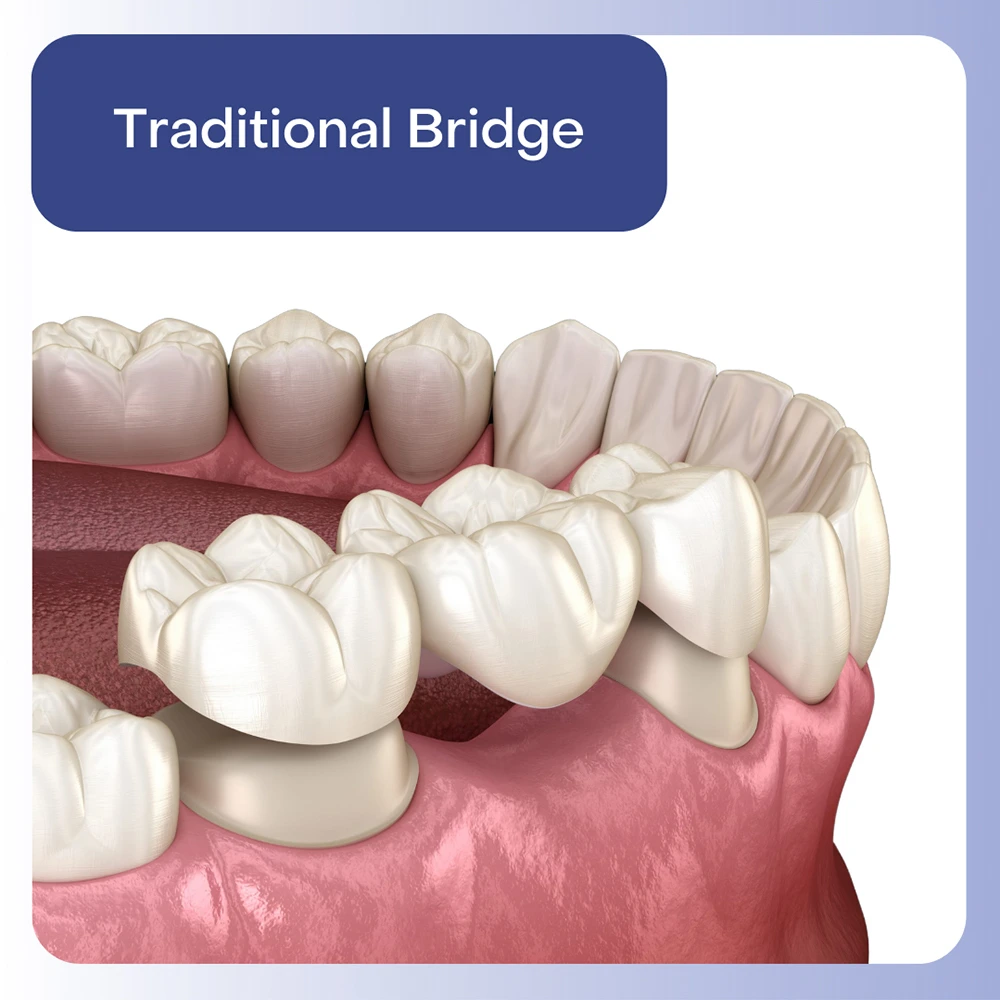
Traditional porcelain bridge
Crowns placed on the two teeth either side of the gap anchor a false tooth between them. Suitable for most single missing tooth cases.
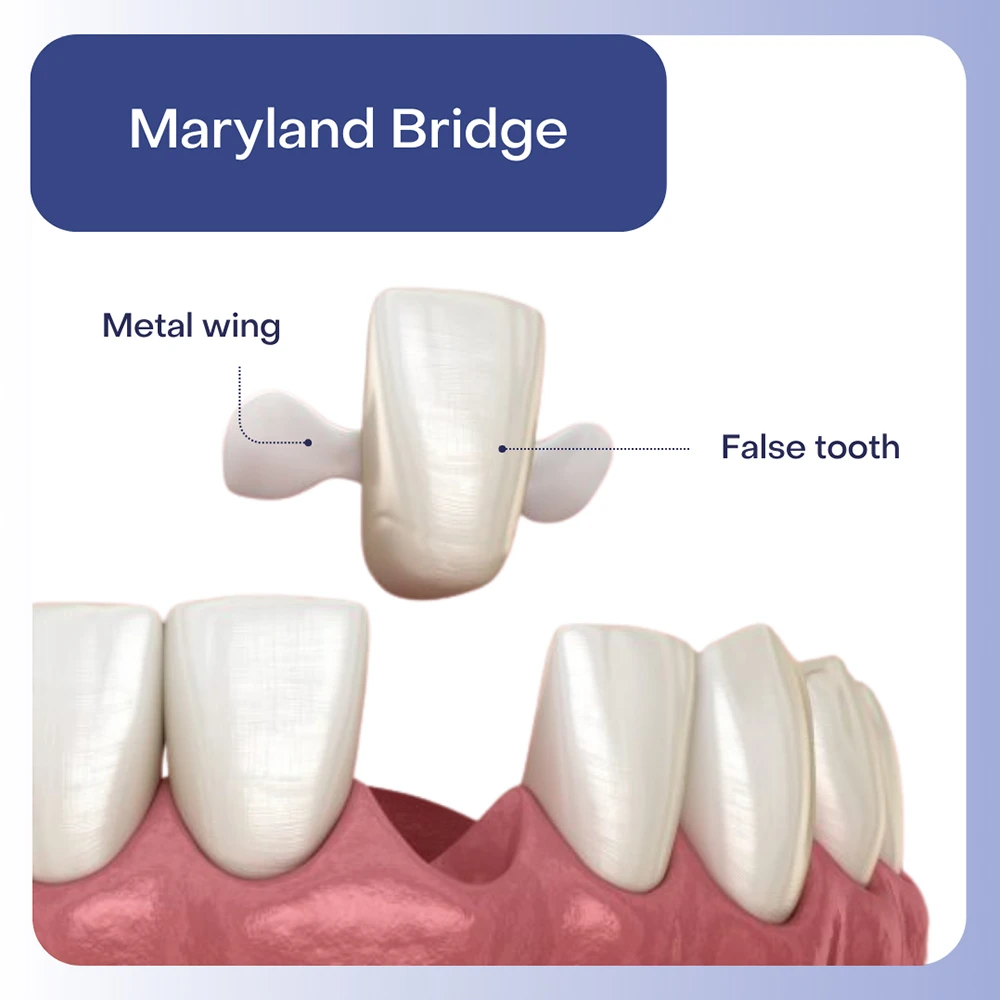
Maryland (resin-bonded) bridge
Metal or porcelain wings bonded to the backs of adjacent teeth — no crown preparation needed. Best for front tooth replacement in suitable cases.
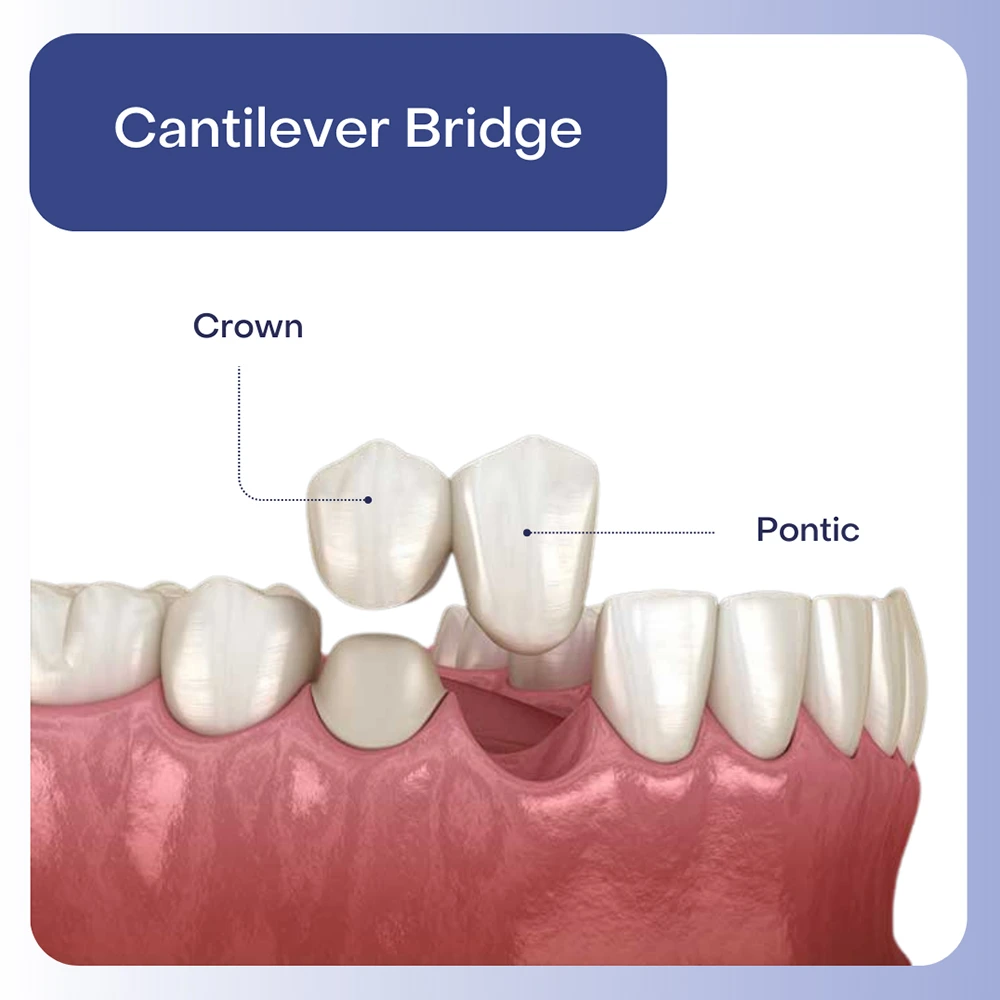
Cantilever bridge
Anchored to just one adjacent tooth instead of two — used when only one side has a healthy support tooth available
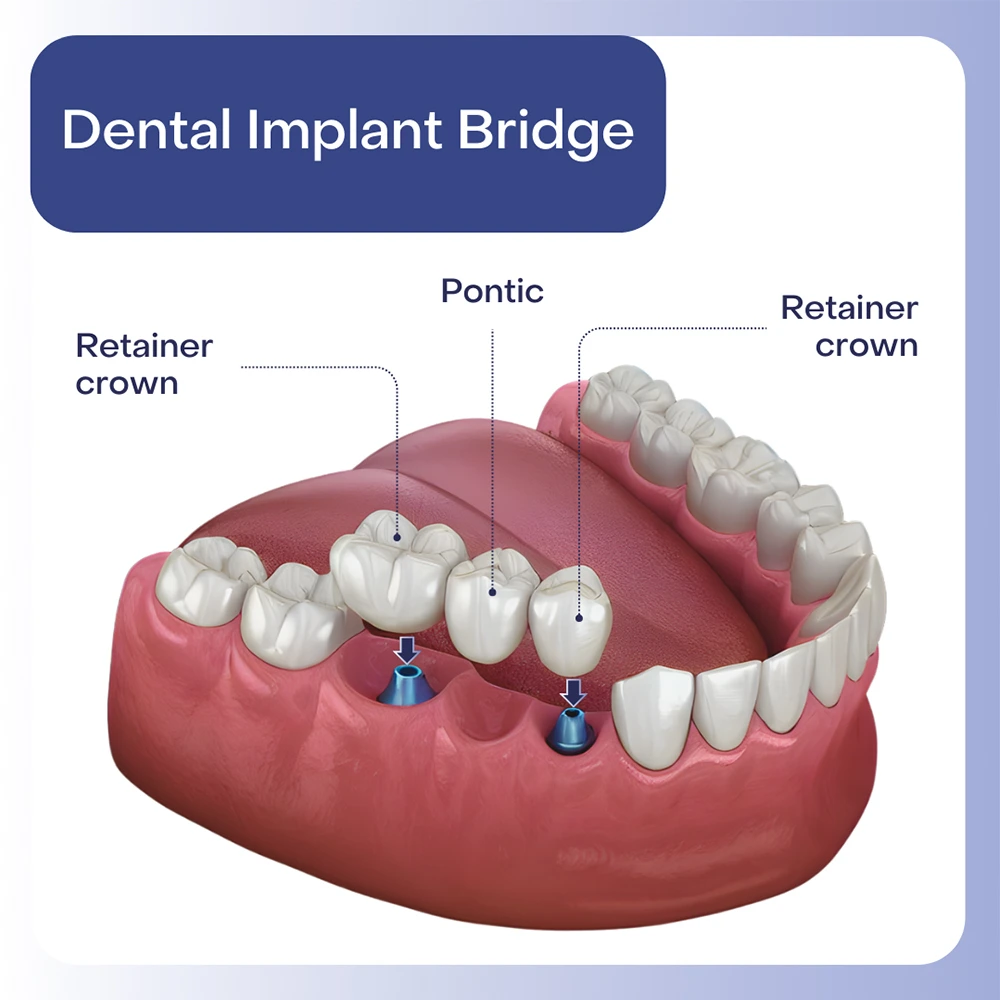
Implant-Supported Bridge
Instead of relying on natural teeth for support, dental implants are inserted into the jawbone to anchor the bridge in place firmly.
Benefits of Porcelain Crowns
Restored confidence
A natural-looking tooth that fills the gap and blends seamlessly with your surrounding teeth.
Natural speech
Missing front teeth alter how certain sounds form. A bridge corrects speech patterns immediately.
Full chewing function
Eat what you want again without pain, avoiding, or strain on your opposite-side teeth.
Preserved alignment
Stops neighbouring teeth from drifting, preventing the cascading bite problems a gap causes.
Gum health
A bridge covers the extraction site, reducing bacterial accumulation and gum disease risk.
Immediate result
Unlike implants, no surgery or healing period — you have a final smile within just two visits
Why missing teeth need to be replaced promptly
- Neighboring teeth drift and tip into the gap
- Bite changes cause jaw joint strain and soreness
- Gum disease risk increases around the empty socket
- Bone loss begins within months of extraction
- Chewing and speech are affected immediately
- Decay risk rises on adjacent over-stressed teeth
Porcelain crowns
Same-day CEREC →
Dental implants
Permanent repl. →
Dentures
Full or partial →
Root canal therapy
Save your tooth →
Restore Your Smile with Custom Dental Bridges in Dublin, OH
- Natural-looking tooth replacement
- Restore chewing, speaking & smile confidence
- Advanced restorative dentistry in Dublin, OH
- Questions Before Your Visit?
Frequently Asked Questions
From scheduling your first appointment to exploring Invisalign, insurance, and payment options, we’re here to help you feel informed about your dental care.
How long does it take to get a dental bridge?
Usually two to three visits spread over a couple of weeks. In the meantime, we’ll fit you with a temporary dental bridge so you’re never stuck with a visible gap while we finish your permanent one.
How long do dental bridges last?
Take care of it well, and a dental bridge can easily last ten years or more. Keeping up with regular checkups helps us catch any wear early, so it keeps fitting and functioning the way it should.
Is getting a dental bridge painful?
We use local anesthesia during the procedure, so discomfort while we work is minimal. Some mild soreness afterward is normal for a day or two, but it clears up quickly.
Can a dental bridge replace more than one missing tooth?
It can; depending on your situation, a bridge can replace one tooth or several in a row. We’ll take a look at your case and figure out what makes the most sense.
How do I care for a dental bridge?
Just brush regularly, floss underneath it with a threader or water flosser, and keep up with your checkups. We’ll show you exactly how during your fitting appointment.
Who is a good candidate for a dental bridge?
If you’re missing one or more teeth and the surrounding teeth are healthy enough to provide support, you’re likely a good fit. A quick exam will tell us for sure.